

How PIV Systems Help Keep Indoor Air Safe from Radon

What is Positive Input Ventilation and Why Does It Matter for Radon Protection?

Positive Input Ventilation (PIV) systems represent one of the most effective solutions for maintaining healthy indoor air quality whilst reducing radon gas concentrations in UK homes and workplaces. Radon is a naturally occurring radioactive gas that forms from the decay of uranium present in all rocks and soil, and is responsible for approximately 1,100 lung cancer deaths annually across the United Kingdom.
PIV systems work by drawing fresh outdoor air through a filter, typically installed in a loft space or on an external wall, and gently distributing this filtered air throughout the property under positive pressure. This process creates a gentle air circulation that helps dilute and displace indoor pollutants, including radon gas, whilst maintaining comfortable living conditions year-round.
The UK Health Security Agency (UKHSA) and The Radon Council both recognise PIV systems as an approved method for radon mitigation in properties where radon levels are moderate. These systems offer particular advantages for UK homeowners because they address multiple indoor air quality issues simultaneously whilst providing continuous protection against radon accumulation.
How Do PIV Systems for Radon Mitigation Actually Work?
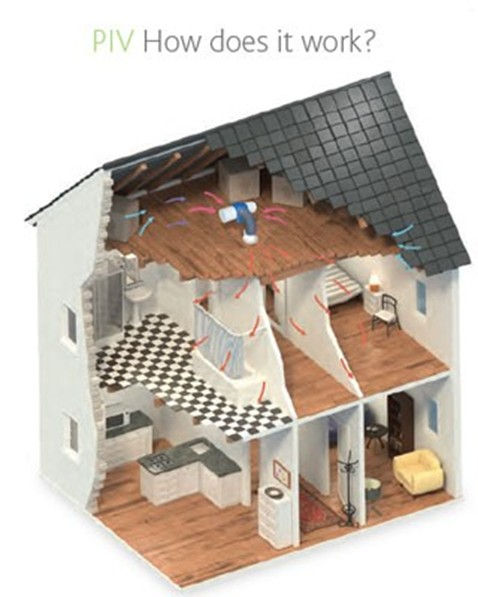
PIV systems for radon reduction operate on a straightforward principle of positive pressure ventilation that reverses the normal airflow patterns within buildings. The system typically consists of a quiet fan unit installed in the loft space that draws in fresh external air through a high-quality filter, warming it slightly before distributing it through ceiling diffusers into the living areas below.
The key mechanism involves creating slightly higher air pressure inside the property compared to the ground beneath, which helps prevent radon gas from being drawn up through foundation cracks, gaps in flooring, or other entry points. This positive pressure differential encourages the natural movement of air from inside to outside, carrying away any accumulated radon and other indoor pollutants.
When PIV systems operate effectively, they provide continuous air exchange at a rate that maintains healthy humidity levels whilst ensuring adequate dilution of radon concentrations. The Health and Safety Executive (HSE) acknowledges that improved ventilation, including positive pressure systems, forms part of the recognised approaches for reducing radon levels in existing buildings.
What Makes PIV Systems for Radon Effective Compared to Other Solutions?
Research demonstrates that PIV systems for radon mitigation are particularly effective for properties with radon levels up to 500 Becquerels per cubic metre (Bq/m³), with Buildings Research Establishment guidance indicating effectiveness for moderate radon concentrations. The UK Radon website includes positive ventilation as a recommended solution for reducing radon levels in existing properties.
PIV systems offer several advantages over alternative radon reduction methods. Unlike radon sumps, which require excavation work and may not be suitable for all property types, PIV installation is relatively straightforward and can be retrofitted into existing homes with minimal disruption. The systems also provide year-round benefits beyond radon mitigation, including condensation control, mould prevention, and overall improvement in indoor air quality.
According to guidance from Buildings Research Establishment (BRE), whilst active radon sumps remain the most effective solution for higher radon concentrations, PIV systems offer excellent value for moderate radon levels whilst delivering additional health and comfort benefits. The continuous operation ensures consistent protection, unlike passive methods that may be affected by weather conditions or seasonal variations.
When Are PIV Systems for Radon Most Suitable for UK Properties?
PIV systems for radon work most effectively in properties that meet specific criteria related to construction type, radon levels, and airtightness. The HSE guidance on radon indicates that positive ventilation of occupied areas represents one of the approved methods for reducing radon levels in existing buildings.
Properties with suspended floors, good overall structural integrity, and moderate radon concentrations typically achieve the best results with PIV installation. According to BRE guidance, PIV systems are particularly appropriate for homes where traditional radon sump installation may be challenging due to solid concrete floors, limited access, or where multiple mitigation benefits are desired.
UK building regulations and guidance from The Radon Council suggest that PIV systems work well as primary mitigation in lower-risk scenarios or as supplementary measures alongside other radon protection methods. Properties in radon-affected areas identified by the UKHSA radon maps may benefit from professional radon testing before determining if PIV systems alone will provide adequate protection.
What Installation and Maintenance Do PIV Systems for Radon Require?

Installing PIV systems for radon typically requires professional assessment and fitting to ensure optimal performance and compliance with UK building standards. The BRE guidance emphasises that proper installation is crucial for system effectiveness in reducing radon concentrations.
The installation process involves mounting the main unit in the loft space or on an external wall, connecting electrical supply, and installing ceiling diffusers in appropriate locations to ensure even air distribution. Professional installers will assess the property's specific ventilation needs, existing air leakage patterns, and radon entry points to determine the most effective system configuration.
Maintenance requirements for PIV systems are minimal, typically involving filter replacement every few years depending on local air quality conditions. Running costs are exceptionally low, with most units consuming minimal electricity, making them highly cost-effective for continuous radon protection. The UK Radon Association recommends regular monitoring to verify continued effectiveness, particularly in properties where radon levels were initially close to action thresholds.

Beyond Radon: Additional Benefits of PIV Systems for Indoor Air Quality
PIV systems for radon provide comprehensive indoor air quality improvements that extend well beyond radon mitigation alone. These systems effectively reduce humidity levels, preventing condensation problems that can lead to mould growth and structural damage in UK properties.
The continuous filtered air supply helps reduce airborne allergens, dust mites, and volatile organic compounds that can trigger asthma and other respiratory conditions. This is particularly beneficial for households with vulnerable occupants, including children, elderly residents, or those with existing respiratory sensitivities.
Energy efficiency represents another significant advantage, as PIV systems help maintain more stable indoor temperatures and can reduce heating costs by improving air circulation patterns. The gentle air movement prevents stagnant air pockets whilst maintaining comfortable humidity levels throughout the property, contributing to better overall health and comfort for occupants.
Frequently Asked Questions
How effective are PIV systems at reducing radon levels?
PIV systems are effective at reducing radon concentrations in properties with moderate levels, typically achieving significant reductions through continuous positive pressure ventilation and air dilution as recognised by HSE and BRE guidance.
Can PIV systems be installed in flats and apartments?
Yes, PIV systems can be installed in flats using wall-mounted units when loft access is not available, providing effective ventilation for smaller properties and apartment buildings.
What ongoing costs are associated with PIV systems?
Running costs are minimal with low daily electricity consumption, and filter replacements are needed every few years. Professional maintenance checks are recommended to ensure optimal performance.
Do PIV systems work in all weather conditions?
PIV systems operate continuously regardless of weather conditions, providing consistent radon protection and air quality improvement throughout the year, unlike passive ventilation methods.
How quickly do PIV systems reduce radon levels?
Most PIV installations begin reducing radon concentrations immediately, with improvements typically measurable within weeks of continuous operation as the system establishes positive pressure.
For professional radon testing and PIV system installation tailored to your property's specific needs, contact Radon Protection UK for expert assessment and comprehensive radon mitigation solutions.
#PIVsystems #radonmitigationUK #radonsafety #indoorairquality #PositiveInputVentilation #radongasUK #homesafetyUK #RadonProtectionUK #radonreduction #ventilationsystems #healthyhomes #radonprevention #airqualityUK #radonprotection #homeventilation #radonawareness #buildinghealth #radonremoval #UKradon #radoncontrol
References, Citations & Sources Used:
https://www.ukradon.org/information/reducelevels_positivevent
https://www.ukradon.org/cms/assets/gfx/content/resource_2726csb1c00bcd4b.pdf
https://www.gov.uk/government/news/ukhsa-and-bgs-publish-updated-radon-map-for-great-britain
https://bre.ac/insights/navigating-radon-protection-a-focus-on-regulations-for-new-buildings/


Comments